
The practical edge
The academy's guides and tools follow one simple rhythm: understand a single idea, try a small action, and reflect on what happened. This page shows how to use the resources so that reading turns into change.
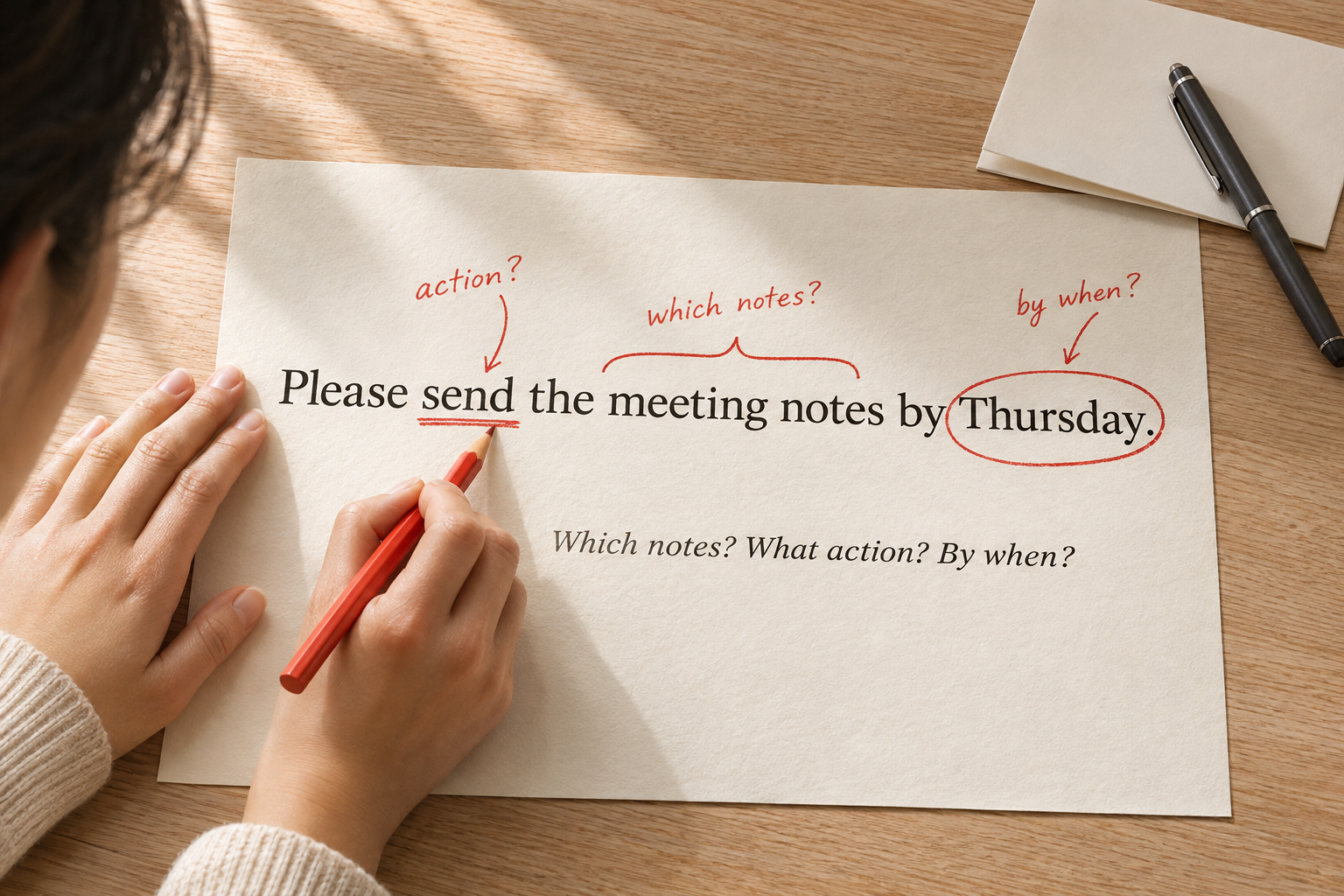 Illustrative practice scene
Keep the learning
close to the doing.
The guides connect an explanation to a worked example and a small activity. Use the output to decide what to try in your own situation.
Four stages, one idea at a time
Each resource moves through idea, example, practice and reflection. The idea is stated plainly. The example shows it in a realistic setting. The practice asks you to do something small. The reflection prompts you to notice what changed.
Focusing on one idea at a time prevents the common trap of reading a lot and applying nothing. A short, complete cycle can help connect reading to a practical attempt.
Why practice and reflection matter
Understanding an idea and using it are different skills. The practice step closes that gap by asking for a modest action, such as rewriting one message or ranking one list. The reflection step then turns the action into learning by asking what worked and what you would adjust.
Without reflection, practice can become repetition. Reflection can provide a useful question or adjustment for the next attempt; its value depends on the task and the context.
A worked example: using the resources well
A visitor wants to make good use of the online resources. They read a guide on opening with the main point, which is the idea. They study a sample email that does this well, which is the example.
They then rewrite one of their own messages, the practice, and afterwards note whether the reply came faster or needed fewer clarifications, the reflection. The suggested next guide builds on exactly that skill.
- 01
Understand one idea
Read a single guide and state its main point in your own words before moving on.
- 02
Try a small action
Apply the idea to something real and low-risk, such as one email, one list or one note.
- 03
Reflect and choose next
Write a sentence or two on what happened, then pick the guide that follows naturally.
How long should one cycle take?
Often fifteen to thirty minutes. The point is to keep the action small enough that you actually do it. A short cycle completed is worth more than a long one postponed.
Do I have to follow the stages in order?
The order is designed to help, since practice makes more sense after an example. However, if you already understand an idea, you can jump straight to practice and use the reflection to check your grasp.
Start with the task
you want to do.
Tell Practical Edge Academy what you want to do better, where you will use the skill and what you have tried. Ask about learning options for yourself or your team.
Contact the academyThe situation →
The practical skill →
A useful next question →